Jewellery craft · 2026-09-17
Sterling 925 or fine 999? Which silver to practise on
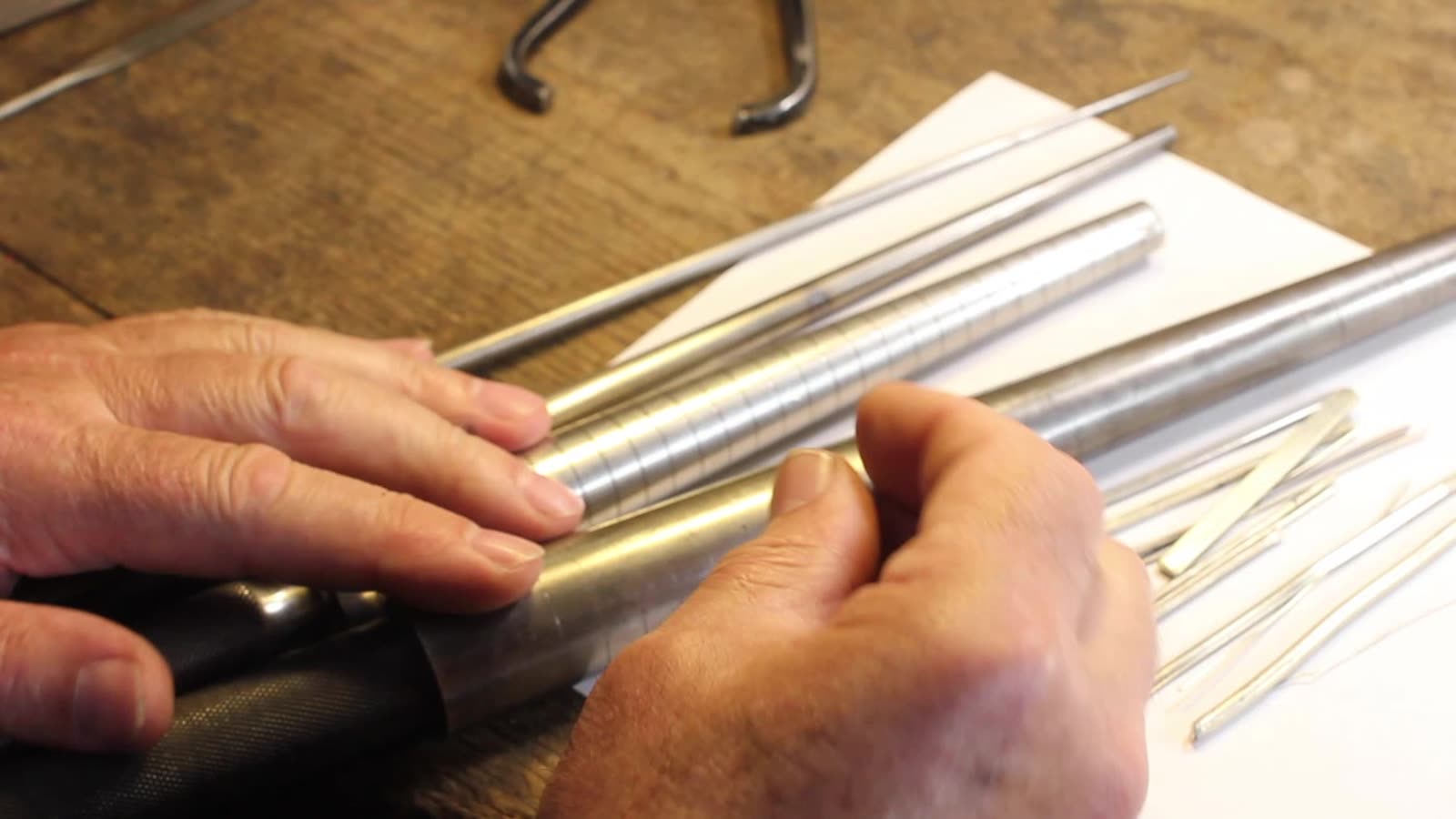
When you are starting out, the first question is rarely “silver or copper?”. It is usually the next one: I have settled on silver — but which one? The shop sells 999 grain and 925 grain, they cost almost the same per gram, and they behave very differently at the bench.
What the numbers mean
The figure is in thousandths: parts of pure silver per thousand parts of metal.
- 999 — fine silver. Practically silver and nothing else.
- 925 — sterling: 925 parts silver and 75 parts of another metal. In jewellery that other metal is copper.
- 800 — it exists and it is legal in Spain, but it is not a workshop fineness. You meet it in old tableware rather than on a learner's bench.
On the alloying metal the school allows no shades of grey: pure copper only. No zinc, no brass, no nickel. And genuinely clean copper — copper with iron added to it spoils the composition of the alloy.
Under the torch
The first thing anyone notices is the colour after heating. 999 comes out of the anneal almost as white as it went in. 925 blackens.
The reason is the copper. When it is heated, the metal combines with oxygen and oxidises: it blackens, and scale appears — that dark layer left behind after annealing. That is why soldering uses a solution of borax and boric acid in equal parts: the borax makes the solder run, and the boric acid covers the piece with a film that protects it from oxidising, because solder will not stick to an oxidised surface.
That scale is no disaster. You pickle when the metal is dirty: oxides, borax, salts, bicarbonate. If between two passes through the rolling mill the metal has only darkened a little, roll it as it is; pickle at the end, once the blank is finished.
What does cause trouble is what the copper leaves under the surface. Anneal after anneal, copper oxide works a little deeper in and leaves a greyish shadow that will not polish out: you have to abrade it away. Jewellers call it firestain. Fine silver never gets it, quite simply because there is no copper to oxidise.
There is another difference that costs you dearly and that hardly anyone warns you about: 925 melts at a lower temperature than fine silver. The margin between “there it is” and “I have lost it” is narrower. Overshoot and the metal runs into a deformed ball — and if that happens on a finished piece, the piece is lost: you cut that part away and redo it, or melt the lot down again.
Under the hammer
Here the difference is even clearer. Metal hardens as you work it: where the hammer strikes, it is compacted — the molecules move closer together — the structure is disturbed, and that area ends up hard instead of soft, and unevenly so. That is what annealing is for: to make the piece uniformly soft again so that it bends easily.
How often? No count will help you; you have to feel it. If the metal is hard and pulls badly through the draw plate, it is time to anneal. Afterwards you will feel that it has softened; the more operations you put it through, the harder it gets again, and you repeat.
925 runs through that cycle legibly and, above all, it stays where you put it: a hammered bangle keeps its shape, a clasp has spring, a ring does not go oval on the finger within a week.
999 softens the same way but barely work hardens at all. It is ductile to the point of being awkward: it marks with a fingernail, it bends almost by being looked at, and a fine silver ring stops being round very quickly.
When fine silver helps
Bezels. A fine silver bezel folds over the stone with minimal pressure and without marking the setting. This is the job where softness stops being a fault and becomes the reason you chose it.
Fusing and granulation. With no copper there is no scale in the way, and the surface behaves far more predictably when you are balling up grains or joining parts without solder.
Enamel. Enamel prefers a high-fineness base. It is common to build the base in fine silver and keep 925 for the parts that have to hold up, such as a pendant's bail.
Metal in reserve. If you buy bullion, it is 999: everything else comes out of it, including your own 925.
When it gets in the way
Everything you learn in the first months — sawing, filing, rolling, drawing down, soldering, texturing — is better learned in 925. Not because it is easier, but because it is more honest: it forces you to read the hardness of the metal, to feel when to anneal, and to control the torch.
Fine silver flatters you. It gives way so easily that you learn none of that. And then the first sellable piece, made in 925, catches you without the craft.
There is a practical reason too: if you buy 999 you will have to alloy it anyway before you can make almost anything. That is one more step — a step well worth learning, but not on day one.
And if what you want is to practise without worrying about wasting material, the usual advice still stands: copper, brass, nickel silver or titanium will do for pure exercises in form. We cover that in which metal to use for practical work.
From 999 to 925: alloying
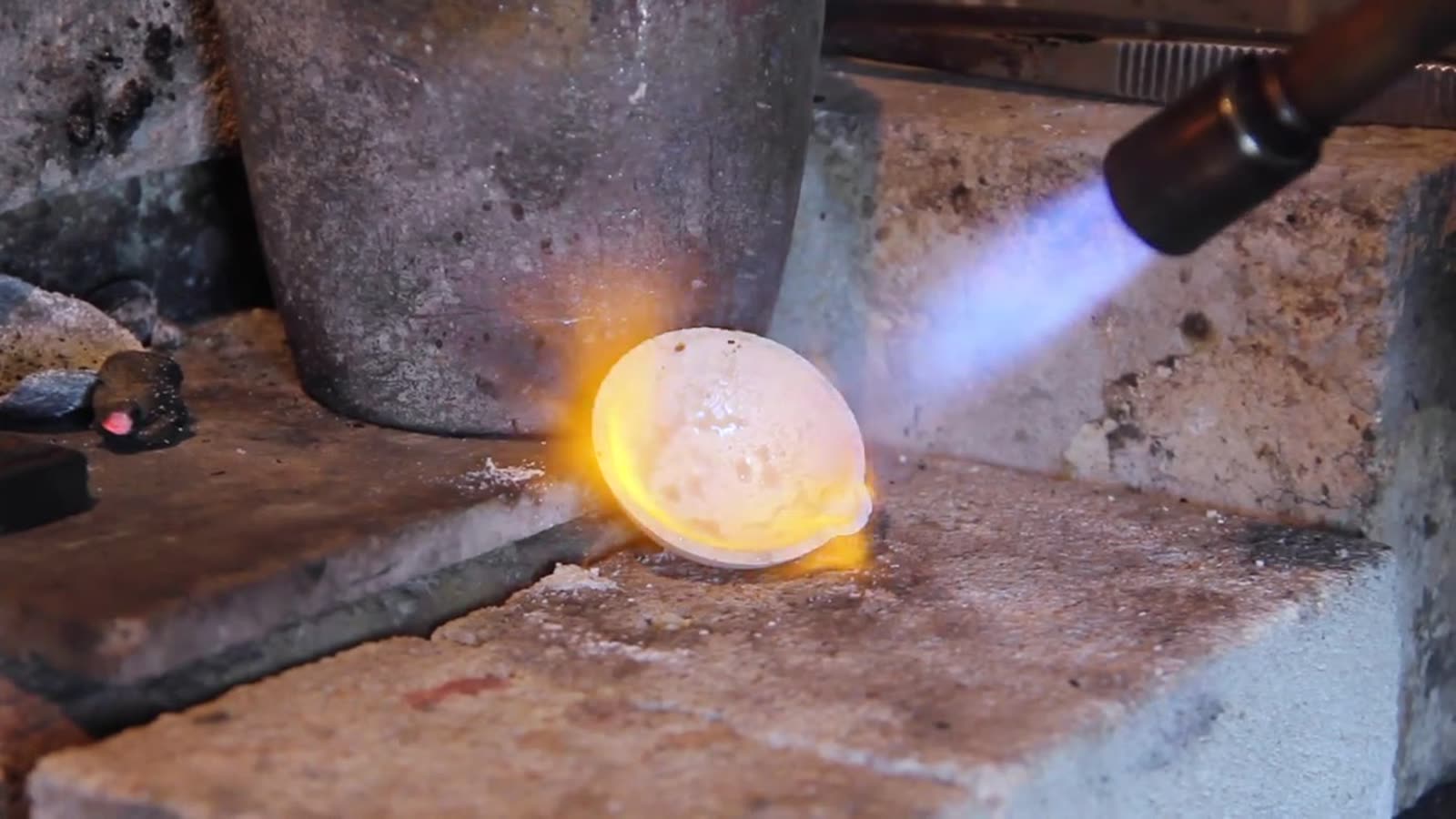
Alloying means adding pure copper to fine silver until 925 parts in a thousand are silver. It is a workshop operation, it is learned in an afternoon, and it makes you independent of ready-made metal.
Two rules that save you grief. The first has been said: pure copper only, and good copper. The second: one crucible per metal. The brass one especially kept apart — it carries a lot of zinc and has no business near your silver.
Scrap and re-melting
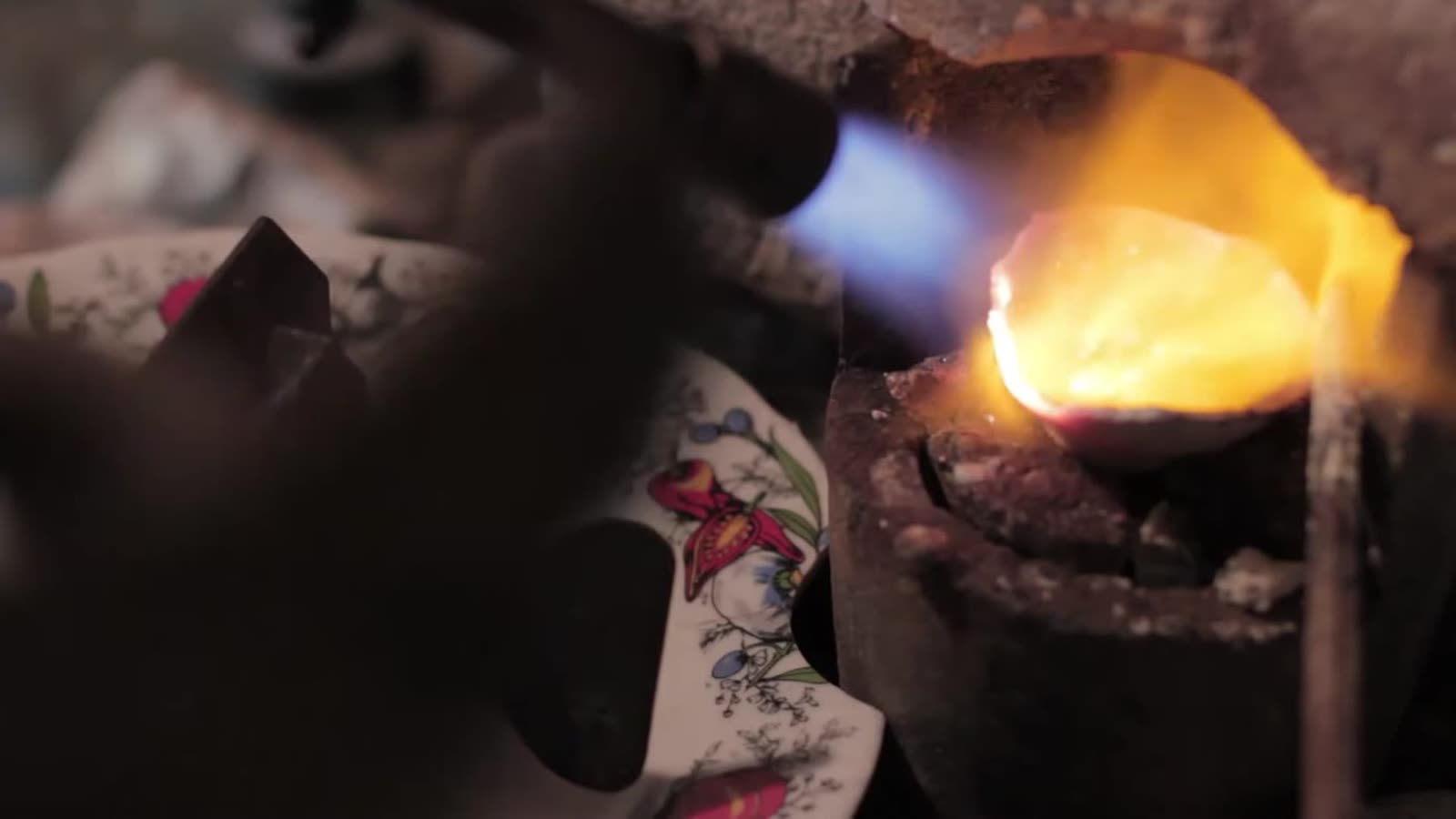
Nothing gets thrown away: filings, sprues, failed pieces. It all goes back into the crucible.
One detail nobody warns you about in time: one jar for 999 and another for 925. Mixed together, you no longer know what fineness you are holding — and the fineness is exactly what you will have to declare the day you sell.
Re-melting is straightforward. If you are melting that same metal again, there is no need to clean it first; after you have poured it into the ingot mould, then you do need to pickle.
Soldered practice pieces can be recovered too: heat them, and as soon as you see the solder start to shine, lift the soldered part away with tweezers. Into the pickle, and from there back into the crucible.
Anything with solder on it goes in a separate jar from the clean offcuts. Solder is a different alloy: whatever ingot comes out of that jar, you can no longer call it 925.
Before you sell in Spain
Spanish law allows only three finenesses for silver: 999, 925 and 800 (Ley 17/1985, article 9.1, text on boe.es). A mix you invented is not a legal fineness, however well the piece is made.
The rest — which hallmarks a piece carries, who applies them and what happens with very small pieces — is already covered in how to set up a home jewellery workshop in Spain. The detail lives there; here the rule about the metal is enough.
What to buy at the start
925 grain, thirty or forty grams. That is enough for the first pieces and to redo them several times without losing anything: silver does not disappear, it changes shape.
Buy 999 on the day you want to learn to alloy — or the day you need a genuinely soft bezel. Not before.
One last note: this article is written by jewelers, not lawyers. The rules quoted are public and dated, but before your first sale have your own situation confirmed by the relevant authority.
Ready to try in practice?
"Jeweller Profession. Beginner" online course