Jewellery craft · 2026-09-17
How to set up a home jewellery workshop in Spain
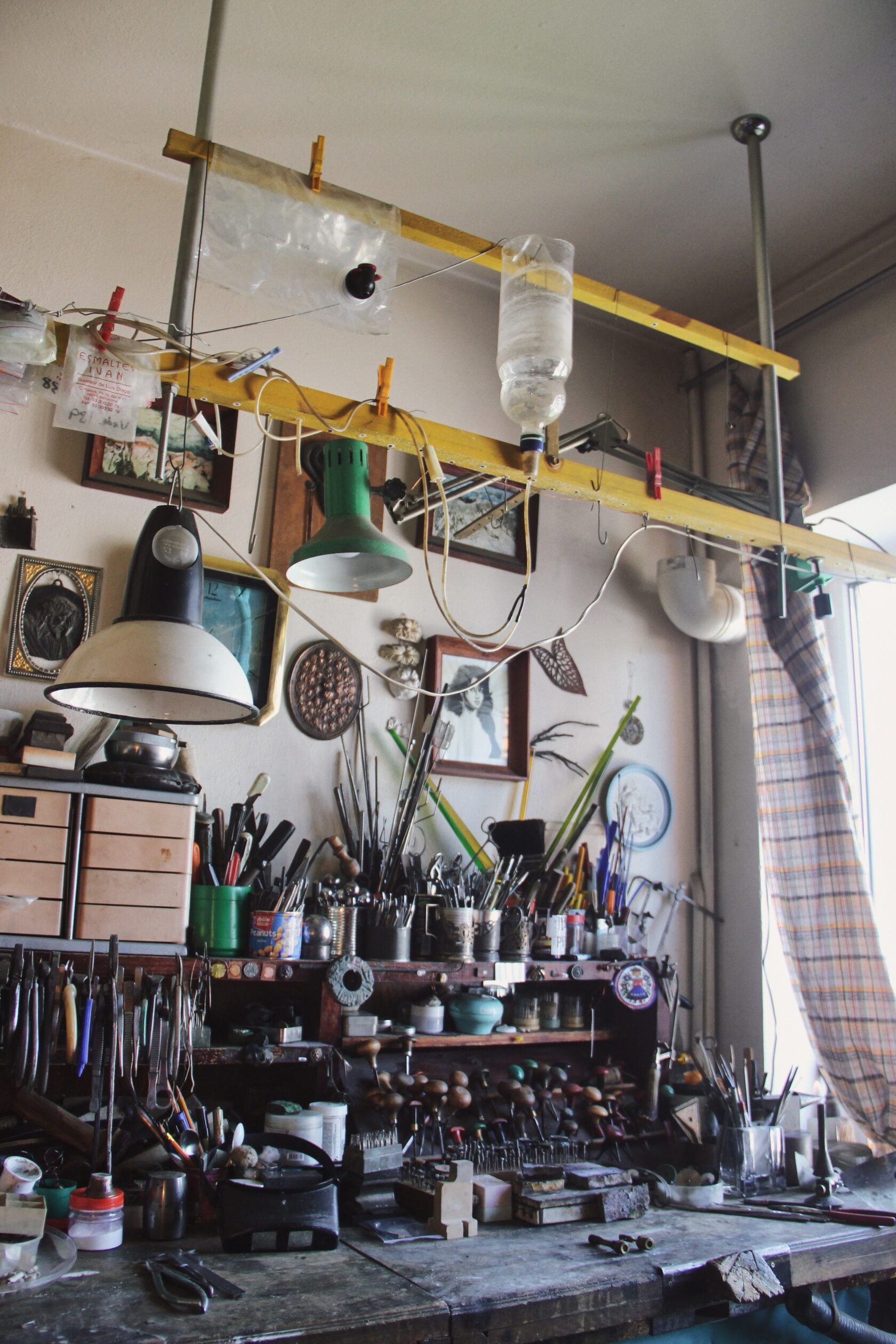
Setting up a jewellery workshop at home is entirely possible, and it takes less room than people imagine. What does need sorting out before you light the torch is three things: the fumes, the gas and the neighbours.
Working from home: what the law says
Spain's commonhold law (Ley 49/1960, article 7.2, text on boe.es) forbids both the owner and the occupant of a flat from carrying on activities that are prohibited by the building's statutes, harmful to the building, or that count as annoying, unhealthy, noxious, dangerous or unlawful.
If someone complains, the chair of the owners' association can demand in writing that the activity stop and, if that demand is ignored, go to court with the association's authorisation.
That does not mean you cannot work at home. It means your workshop must not smell, must not make noise at odd hours, and must not look dangerous. A tidy bench with extraction and no smoke coming out of the window bothers nobody.
Before you sell anything, ask two questions: your ayuntamiento, what procedure it requires for an activity carried on at home, and your owners' association, what its statutes say. The answers differ from one municipality to the next, so copying what somebody else was told is useless.
The bench
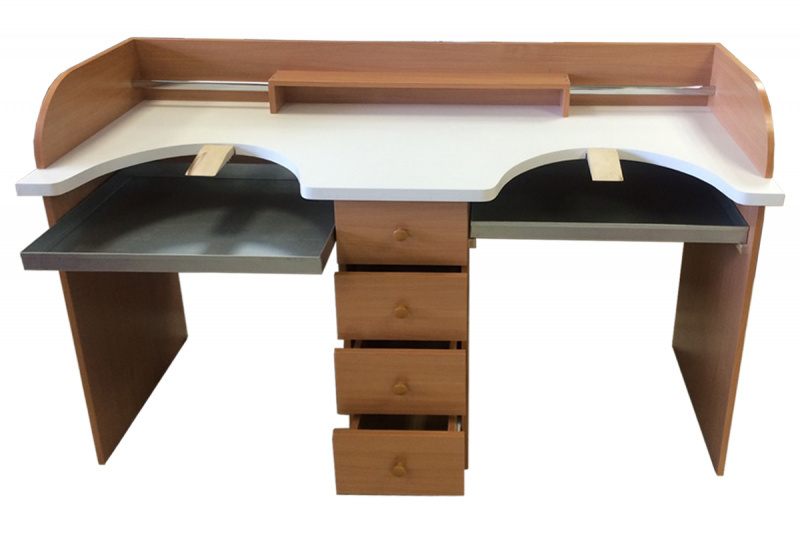
The classic jeweller's bench has a high top — chest height when you are seated — a semicircular cut-out and a wooden pin to rest the work against. If you cannot buy one, any solid table will do: what matters is that it does not move and that the height is right.
Underneath, a tray or drawer to catch the filings. Those filings are silver, and after a few months they are enough silver to melt.
Light: an adjustable lamp above the work, never behind your head. Working inside your own shadow tires the eyes faster than anything else.
Ventilation: this one is not negotiable
Spain's occupational safety institute, the INSST, is explicit in its note NTP 7, “Soldadura. Prevención de Riesgos Higiénicos”: for soldering and welding, other than occasional or exceptional work, local exhaust ventilation at each workstation should always be used.
It adds something many people miss: general ventilation is not a solution in itself, only a complement to local extraction.
Translated to a flat: opening the window is not enough. You need something that takes the fumes away before they pass your face — a hood or an extraction arm right above the soldering spot, venting outside.
The same goes for pickling. Keep the bath covered when it is not in use and ventilate when it is. And the golden rule, which the INSST sets out in its NTP 768: the acid always goes into the water, never the other way round — the wrong way round the reaction gives off heat and can become extremely dangerous.
The gas cylinder
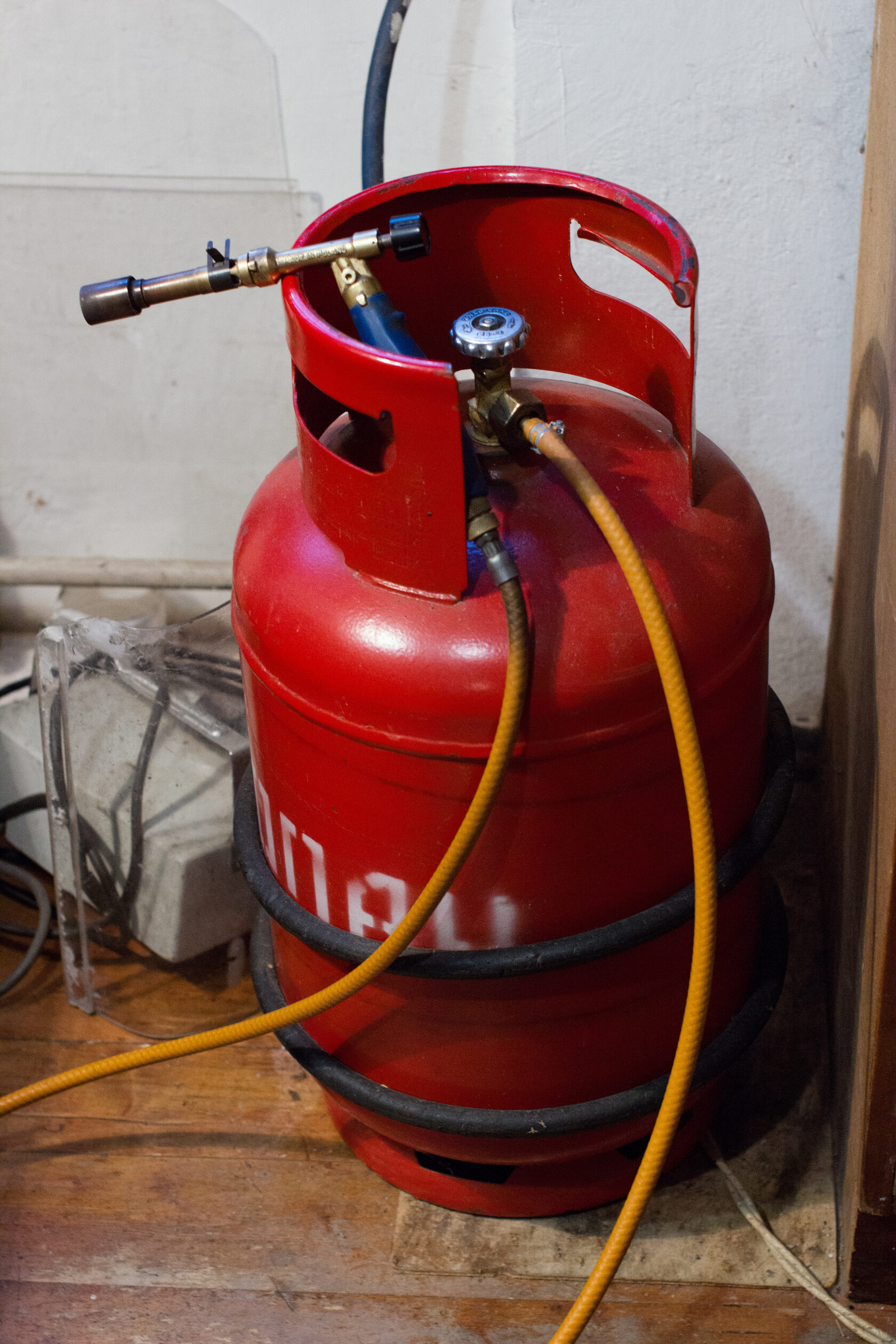
In Spain, installations of liquefied petroleum gas cylinders for your own use are governed by Real Decreto 919/2006 and its technical instruction ITC-ICG 06 (text on boe.es). Do not improvise here: your gas supplier and an authorised installer will tell you what applies to your type of cylinder and dwelling.
ITC-ICG 06 itself sets rules worth knowing before you decide where the cylinder goes:
- cylinders may not be installed in dwellings or premises whose floor is below ground level — basements and semi-basements — nor in stairwells, nor in corridors, unless the competent body of the autonomous community expressly authorises it
- inside the dwelling, no more than two cylinders may be connected, in use or in reserve
- minimum distances: 1.5 m from hearths and heat sources, 0.5 m from power sockets and 0.3 m from switches and electrical conductors
And what common sense dictates in any workshop: the cylinder upright and in plain sight, the whole hose visible, the valve closed at the end of the day — not just the torch — and nothing flammable around the soldering spot: paper, solvents, rags.
The INSST also publishes NTP 495, “Soldadura oxiacetilénica y oxicorte: normas de seguridad”. It is worth reading before you set anything up.
Hallmarks: what has to be marked before you sell
Spain's law on articles made from precious metals (Ley 17/1985, boe.es) sets the permitted finenesses for silver in article 9.1: 999, 925 and 800.
Article 10.1 requires two marks, placed next to each other, before a piece can be put on the market: the punzón de identificación de origen — the maker's or the importer's — and the punzón de garantía.
You do not apply that second mark yourself. Article 4.3 reserves guarantee punches to the laboratories empowered to use them by the competent public authorities.
The regulation implementing the law (Real Decreto 197/1988, boe.es) also solves a practical problem. Its article 12.3 exempts from marking the piece itself those objects that the punch would seriously damage, and treats silver items weighing less than seven grams as small. In that case the piece may carry a soldered plate of the same metal and the same fineness, marked beforehand.
Where to start
Do not buy the whole workshop at once. A solid table, good light, extraction over the soldering spot and thirty grams of silver are enough for the first pieces.
The rest is asked for by the work itself: the day a tool is missing, you will know it without anyone telling you.
One last note: this article is written by jewelers, not lawyers. The rules quoted are public and dated, but before your first sale have your own situation confirmed by the relevant authority.
Ready to try in practice?
"Jeweller Profession. Beginner" online course