Jewellery craft · 2023-12-27
How to set up a beginner jeweller's workspace?
Everyone's circumstances differ, but you should make use of the opportunities you have.
Workbench
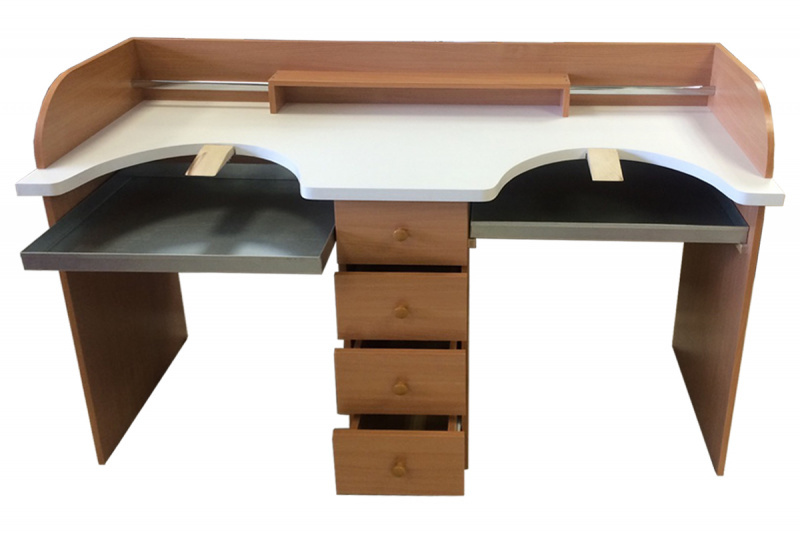
You can buy a dedicated jeweller's workbench or use an ordinary table.
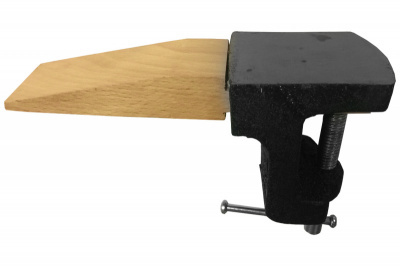
Bench pin
Attach it to an ordinary table with a hand vice 🗜 or buy a bench pin with a clamp. 👇
Waste drawer
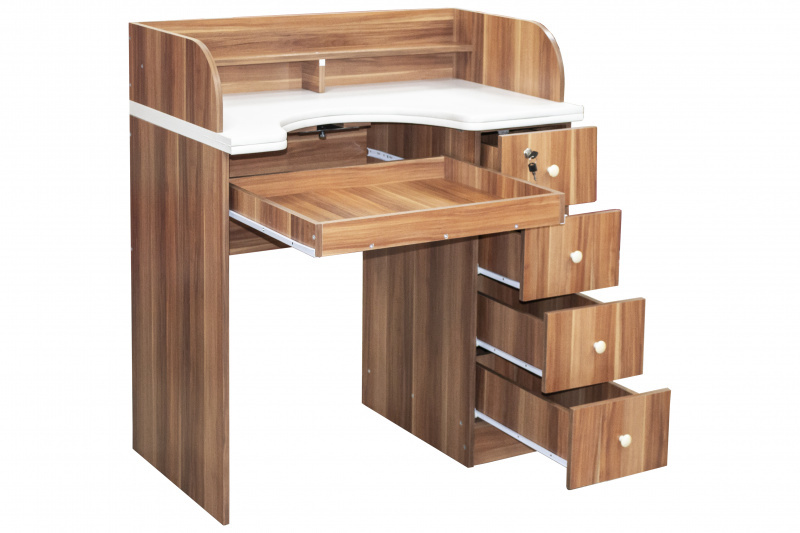
Underneath, fit a drawer, tray or box for the filings: they collect in a separate container, are cleaned and remelted.
This drawer should slide out (like the keyboard tray on a computer desk).
You can keep tools in the drawer.
Lighting
The light should fall from the left.
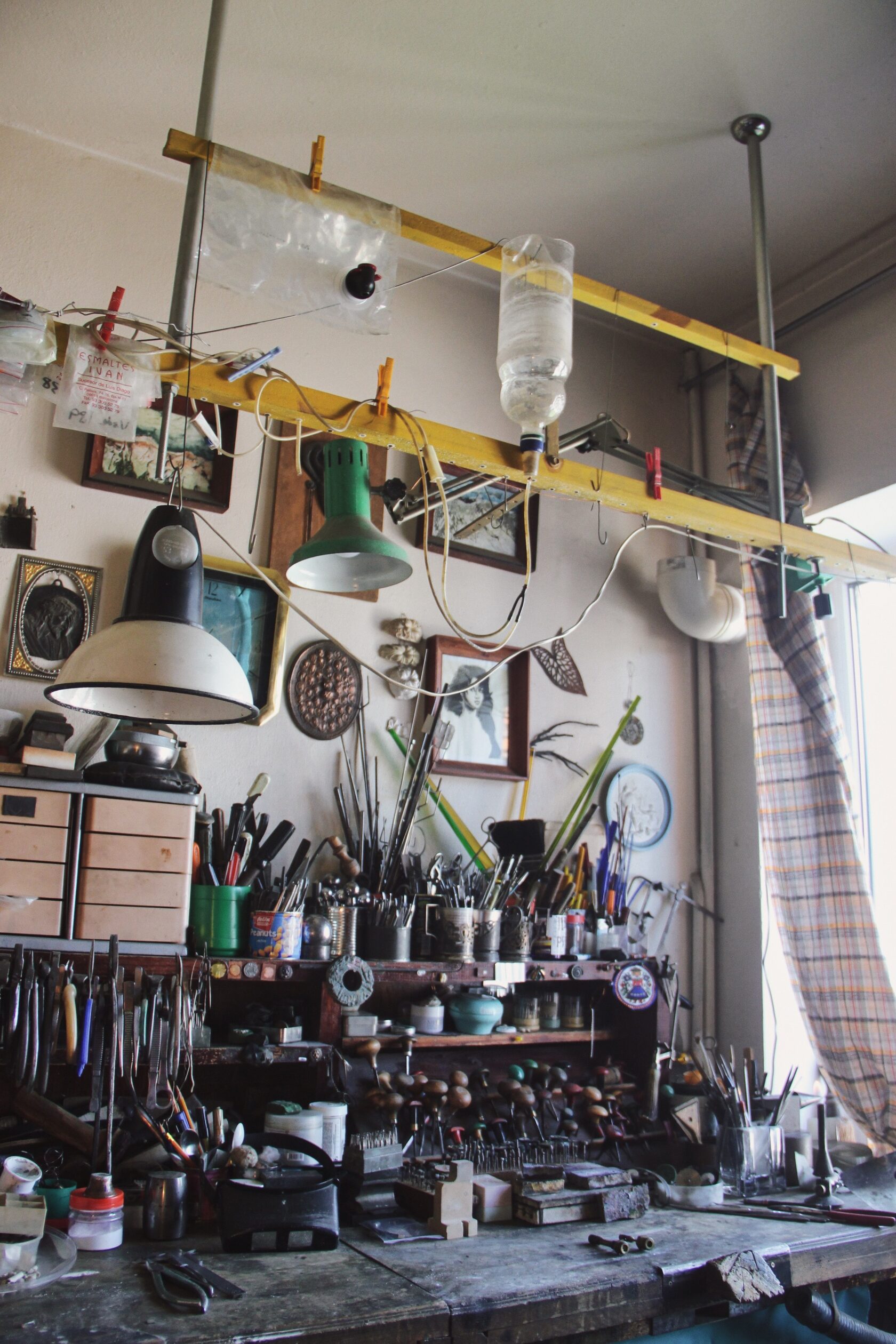
Ideally the lamps should be adjustable from above, higher or lower, and should not stand on the table but hang from above (a desk lamp has a cable onto which something hot can fall and catch fire).
The lamp should be fixed above the table to the ceiling or to a rail, as in this photo. 👇
Ventilation
Install an extractor of the kind used in kitchens, or keep a window or vent window open.
You can fit an ordinary vent-window fan in the window. Keep the fan on all the time while you work to ventilate away the acid fumes.
Don't forget to air the room before you work.
You can see an example of an extractor in this video at 03:08:
Chair
Choose one that is comfortable. The chair should not roll around (no wheels), so that you can rest your arms on the armrests, and the legs of the chair or stool do not slide.
Where to put the rolling mills?
On a heavy table that stands firmly. You can also use a balcony, on a (sturdy) windowsill or on boards adapted for this purpose.
Safety
Above all, make sure there is nothing nearby that can catch fire.
You can find the main points in this video 👇
For students of the online course "Jeweller Profession. Beginner":
Please, if you are on the "Gold" plan, show on 🎥 video the conditions you have for equipping your future workspace:
- Show your table.
- The dimensions of the table.
- The area and dimensions of the room, and how full it is.
- Windows, windowsills.
- What is in the room? What furniture?
And we will tell you where it will be convenient to set up the rolling mills, vices, drawers and everything else in your particular case.
As you work, you will keep adding to and fitting out your workspace.
Start small.
Ready to try in practice?
"Jeweller Profession. Beginner" online course